

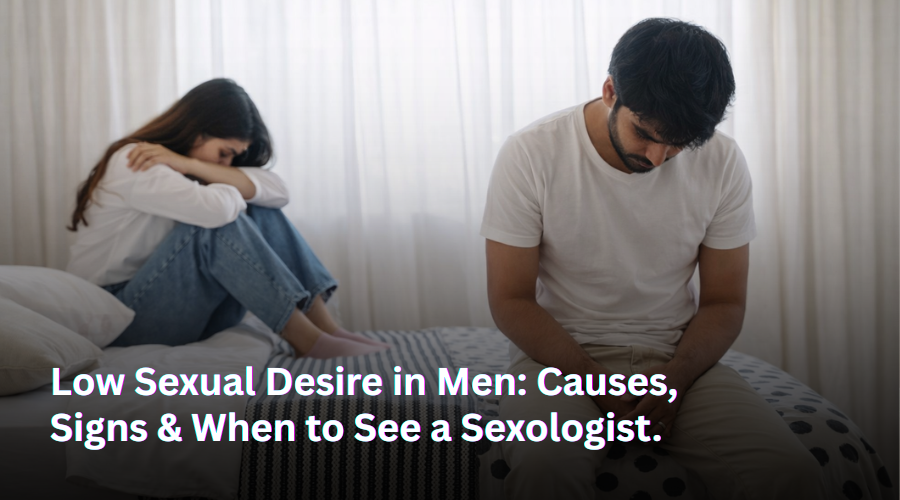
Low Sexual Desire in Men: Causes, Signs & When to See a Sexologist
There are things men carry quietly. A slow fading of interest in sex is one of them — no dramatic moment, no single explanation. Just a gradual withdrawal that begins to affect confidence, mood, and the quality of a relationship. Many assume it is stress, or aging, or simply 'how things are now.' But when it lingers for weeks or months, it deserves honest attention.
Low sexual desire in men, often referred to as low libido, is far more common than most conversations acknowledge. It is not a personal failure. It is a health concern — and like any health concern, understanding the root cause is the first step toward addressing it.
What Does Low Sexual Desire Actually Mean?
Sexual interest naturally varies from person to person and shifts over time. A brief dip — during illness, a stressful period, or emotional strain — is entirely normal. The concern arises when that low interest becomes persistent, distressing, or starts affecting the relationship.
Clinically, when a man experiences a consistently reduced or absent desire for sexual activity that causes distress, it may indicate a condition called Hypoactive Sexual Desire Disorder (HSDD). Studies suggest this affects between 6–8% of men globally. In India, where sexual health is rarely discussed openly, many men quietly manage this for years without seeking help.
What Causes Low Libido in Men?
There is rarely one single cause. Low sexual desire in men typically develops when several factors — physical, psychological, and lifestyle-related — combine over time.
Hormonal Changes
Testosterone plays a central role in male sexual drive. When levels fall below a healthy range — whether due to age, medical conditions, or other factors — libido often declines alongside it. Thyroid imbalances and elevated prolactin levels can also suppress desire in men, even when testosterone appears normal.
Chronic Stress and Mental Load
Sustained stress raises cortisol levels in the body, which in turn suppresses testosterone production. A man under prolonged professional or personal pressure often finds that sexual desire simply stops registering. It is not a choice — it is a physiological response to overload.
Depression and Anxiety
Both conditions affect how the brain processes pleasure and motivation. Depression flattens interest across the board, while anxiety introduces performance-related worry that makes desire difficult to access. These are clinical conditions, not personal weaknesses, and they respond well to proper treatment.
Relationship and Emotional Disconnect
Sexual desire does not exist apart from the emotional quality of a relationship. Ongoing conflict, unspoken resentment, lack of communication, or emotional distance between partners can quietly erode intimacy. When closeness outside the bedroom disappears, desire rarely survives inside it.
Lifestyle Factors
Poor sleep, limited physical activity, excessive alcohol, smoking, and an unbalanced diet all contribute to lower testosterone levels and reduced blood flow — both of which directly affect libido. These factors are modifiable, and addressing them often produces measurable improvements.
Medication Side Effects
Certain commonly prescribed drugs — including some antidepressants, blood pressure medications, and finasteride — are known to reduce sexual desire in some men. If the timeline of low libido coincides with starting a new medication, that connection is worth discussing with a doctor.
Signs Worth Paying Attention To
Low libido is not just about how often someone wants sex. It also shows up as:
- Little or no interest in sexual activity, even when the setting is comfortable
- Absence of sexual thoughts, fantasies, or spontaneous desire
- Feeling emotionally detached or disengaged during intimacy
- Actively avoiding situations that might lead to sex
- A noticeable and sustained change from your usual level of interest
These signs alone do not confirm a diagnosis — but if they persist and are affecting your wellbeing or your relationship, speaking to a professional is the right move.
Is This the Same as Erectile Dysfunction?
No — and the distinction matters. Erectile dysfunction refers to difficulty getting or maintaining an erection. A man with ED may have completely normal sexual desire — his body simply does not respond in the expected way. Low libido, by contrast, is about the desire itself being absent or significantly reduced. A man may be physically capable of an erection but feels no particular interest in sex. Because the causes and treatment paths differ, understanding which issue is present — or whether both are — is an important part of any evaluation.
How Low Libido Fits Into the Broader Picture of Male Sexual Health
Low sexual desire is one of several concerns that fall under male sexual problems. It often does not occur in isolation. Some men dealing with low libido also notice changes in mood, energy, or physical stamina. Others find it connected to issues like premature ejaculation or performance anxiety, where frustration over one concern gradually reduces overall interest in sexual activity. A thorough evaluation helps identify which factors are primary and which are secondary.
When Is It Time to See a Sexologist?
A week or two of low interest — especially tied to a stressful period, an illness, or relationship tension — is not usually a cause for concern. The body moves through phases.
Consider consulting a professional when:
- The reduced interest has lasted four weeks or more
- It is causing distress to you or your partner
- Other symptoms have appeared — fatigue, mood changes, difficulty concentrating
- You have made lifestyle adjustments and seen no improvement
- You suspect medication may be a factor
Treatment approaches vary depending on the underlying cause. Some men benefit from counselling and psychological support. Others respond well to lifestyle restructuring. In certain cases, Ayurvedic treatment for sexual health — which focuses on restoring natural balance without harsh interventions — may also be considered as part of a broader plan. The right path depends entirely on the individual.
Getting the Right Guidance
At Dr. R.P. Kakkar Clinic in Bareilly, low sexual desire in men is approached with full confidentiality and clinical care. With over 30 years of experience in male sexual health, Dr. Kakkar evaluates each case on its own terms — looking at physical, psychological, and lifestyle factors before suggesting any course of action. There are no exaggerated promises. Only honest, responsible medical guidance.
If this concern has been present for a while and you are unsure where to start, book a consultation. A single conversation with a qualified sexologist can clarify what is happening and what the realistic options are. Early attention almost always leads to better outcomes.
Final Thought
Low sexual desire in men is not something to simply endure or dismiss. Whether the cause is hormonal, psychological, relationship-based, or lifestyle-related, there is a way forward — but it starts with taking the concern seriously. That first step, usually the hardest, is the most important one.
 Whatsapp
 Call
Call